
The panel held on December 23, 2025, at Concorde Tower Hotel was organized in collaboration with the Continuing Education and Research Center of Altınbaş Kıbrıs Üniversitesi and EMI Academy. Bringing together representatives from academia, the public sector, and the private sector, the panel served as a critical platform for developing the entrepreneurship ecosystem in the TRNC and strengthening collaboration among stakeholders.
The opening speeches of the panel were delivered by Prof. Dr. Behiye Çavuşoğlu (Rector of Altınbaş Kıbrıs University), Prof. Dr. Mustafa Tümer (Director General of the Cyprus Foundations Administration), Yrd. Doç. Dr. Sedef Altınbaş (Member of the Board of Trustees at Altınbaş Kıbrıs University), and Olgun Amcaoğlu (TRNC Minister of Economy and Energy). In their speeches, they emphasized the role of entrepreneurship in economic development and highlighted the importance of collaboration between the public sector, private sector, and academia.
The panel was moderated by Prof. Dr. Himmet Karadal, who guided comprehensive discussions on current developments, opportunities, and challenges in the entrepreneurship ecosystem.
Key takeaways from the panel included supporting entrepreneurial activities in the TRNC, promoting innovative business models, integrating young entrepreneurs into the ecosystem, and strengthening digitalization and access to finance.
In conclusion, the panel served as an important guide for strengthening the entrepreneurship ecosystem in the TRNC and enhancing coordination among stakeholders.
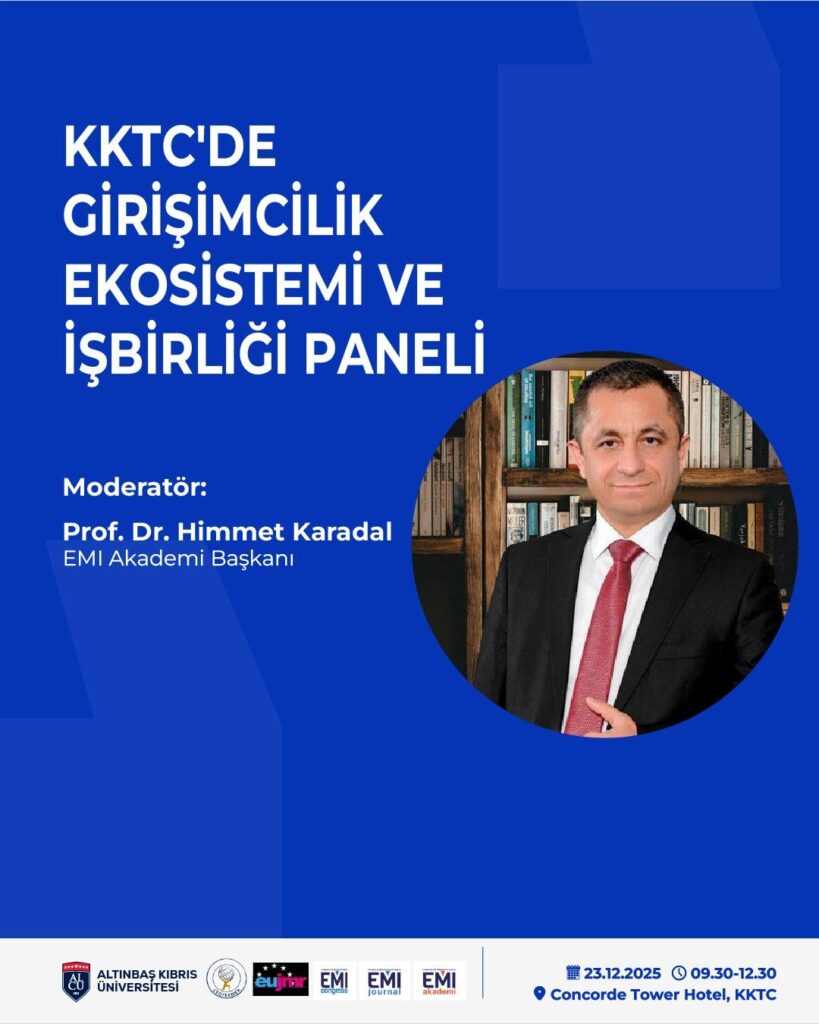
Prof. Dr. Himmet Karadal
Moderator / President of EMI Academy
Moderator / President of EMI Academy
- Topic: Ecosystem Perspective and Strategic Framework
Prof. Dr. Himmet Karadal outlined the overall framework of the panel, emphasizing that the entrepreneurship ecosystem should not be seen merely as a collection of individual success stories. Instead, it must be evaluated holistically within the context of systemic structures, institutional capacity, cultural dynamics, and governance mechanisms. He highlighted that the ecosystem is not made up solely of individual entrepreneurs; institutional structures, policy environment, and regulatory frameworks play a decisive role in its success.
Key points:
- Entrepreneurship culture should start early in the education system.
- A strategic “National Entrepreneurship Master Plan” is needed in the TRNC.
- Evidence-based policy-making is lacking.
- A systematic matching mechanism between academia and the real sector should be established.
- The entrepreneurship ecosystem is holistic; public sector, universities, private sector, and civil society must act together.
- There is a lack of coordination in the ecosystem.
- Entrepreneurship is not only about finance; it requires a mindset shift.
- Structures that do not reward success in education contradict entrepreneurship culture.
- Evidence-based policy-making is essential.
According to Karadal, sustainable entrepreneurship in the TRNC requires cultural transformation and institutional planning, and entrepreneurship should be placed at the center of development policies.
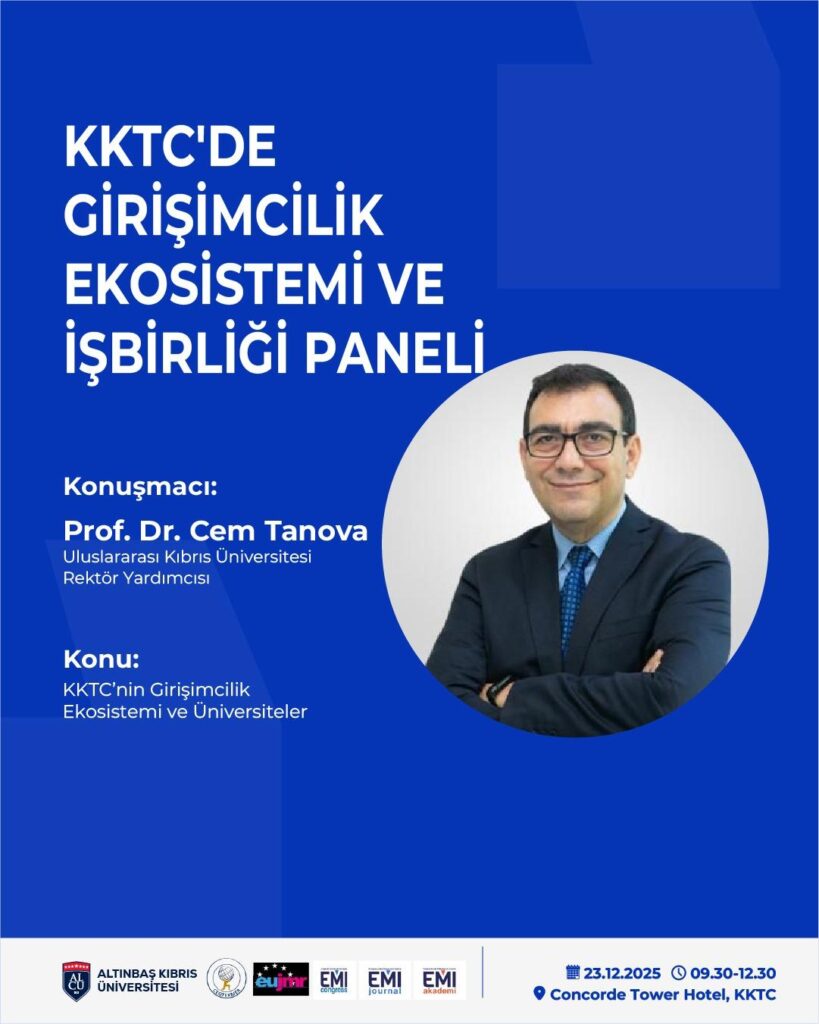
Prof. Dr. Cem Tanova
Vice-Rector, International Cyprus University
Vice-Rector, International Cyprus University
- Topic: TRNC’s Entrepreneurship Ecosystem and Universities
Tanova analyzed the role of universities in the entrepreneurship ecosystem under three main headings:
- Entrepreneurship education
- Incubation centers
- Industry collaboration
Key evaluations:
- Entrepreneurship courses should be mandatory at universities.
- Student projects should be connected with investors.
- Commercialization could be considered as a criterion for academic promotion.
He emphasized that universities are not just educational institutions but also economic actors.
International Recognition and Academic Visibility:
- TRNC’s lack of international recognition is being addressed through academic visibility via universities.
- Academics are represented in international literature; however, a holistic institutional digital academic platform is lacking.
- Institutional representation in AI, cloud systems, and digital academic networks is insufficient.
Structural Issues of Universities:
- Entrepreneurship culture is not institutionalized.
- Revenue models largely depend on student tuition, which hinders a transformation focused on production and innovation.
Foreign Student Integration:
- Integration of foreign students into society is weak.
- Turkish courses are basic.
- Students are not actively involved in knowledge production.
Access to Funding:
- EU funds are mostly channeled through individuals and NGOs.
- Institutional access for universities is limited.
- Structural barriers exist in TÜBİTAK support programs.
Tanova emphasized that universities need to transition from knowledge production centers to innovation and commercialization hubs.
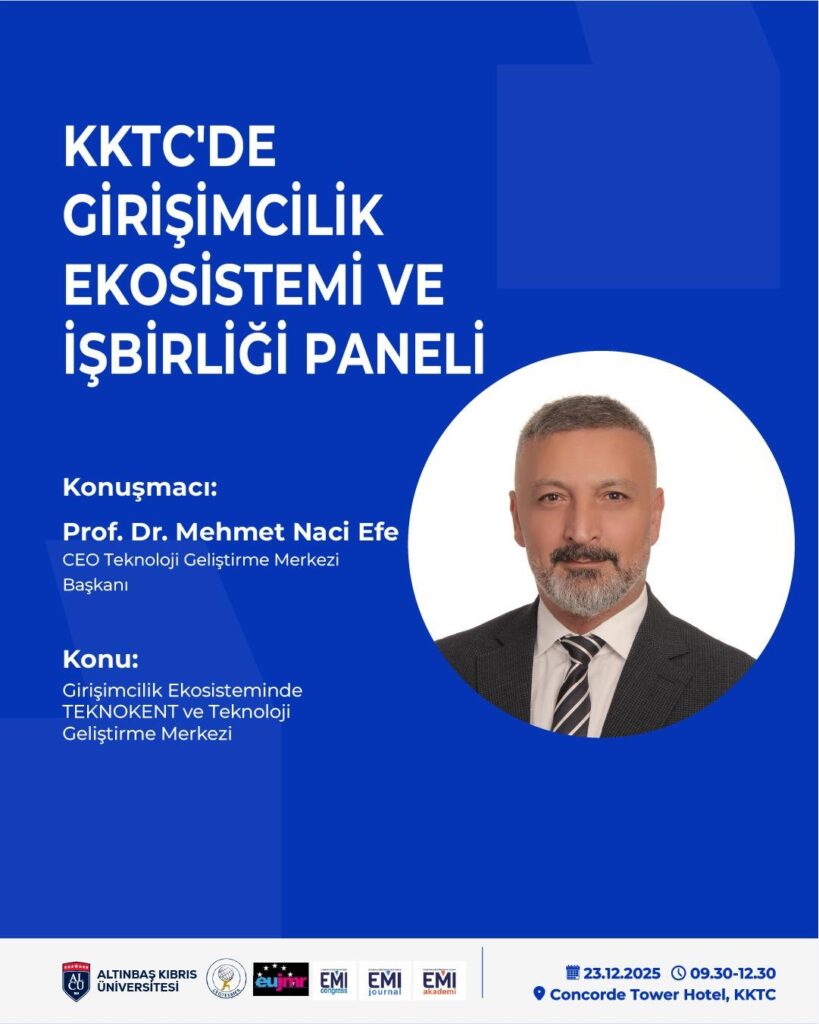
Prof. Dr. Mehmet Naci Efe
CEO, Technology Development Center
CEO, Technology Development Center
- Topic: Technoparks and Technology Development Centers in the Entrepreneurship Ecosystem
Prof. Dr. Efe detailed the role of technoparks.
Key points:
- University R&D projects are not commercialized.
- There is a gap between patent production and product development.
- Technoparks should establish active mentorship and investor-matching mechanisms.
- Digital transformation and software ventures are opportunities for the TRNC.
- University–industry collaboration is weak.
- Lack of digitalization is a significant structural problem.
- Technology development centers should be mentorship and commercialization hubs, not just physical spaces.
- Technology investments are essential for international competitiveness.
According to Efe, the TRNC can turn its geographic disadvantage into an advantage by focusing on the digital economy.
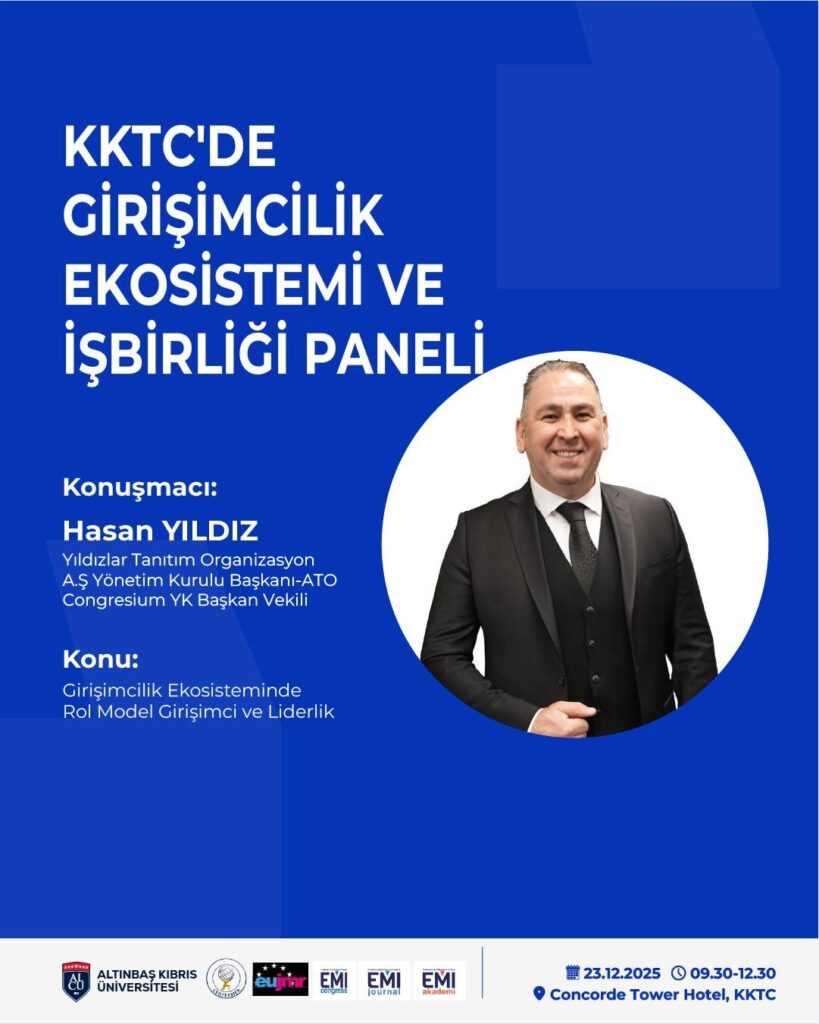
Hasan Yıldız
Chairman, Yıldızlar Tanıtım Organization & Vice President of ATO
Chairman, Yıldızlar Tanıtım Organization & Vice President of ATO
- Topic: Role Model Entrepreneurship and Leadership
Yıldız shared his entrepreneurial experience, emphasizing the decisive role of leadership culture in sustainable success. Highlighting vision, strategic planning, and team spirit, he cited the transformation of a small-scale company founded in 2003 into a multi-company structure through proper leadership, determined growth strategies, and innovative investments as an example.
Themes:
- Risk-taking courage
- International vision
- Networking
Success factors:
- Clear and sustainable vision
- Strategic and planned approach
- Timely and decisive investment in technology
- Strong team structure and effective teamwork
- Success begins with the right mindset and determination
- Technological investments accelerate business growth
- Mobile concert systems and cultural-artistic investments as examples of innovative growth
- Collaboration and teamwork culture provide competitive advantage
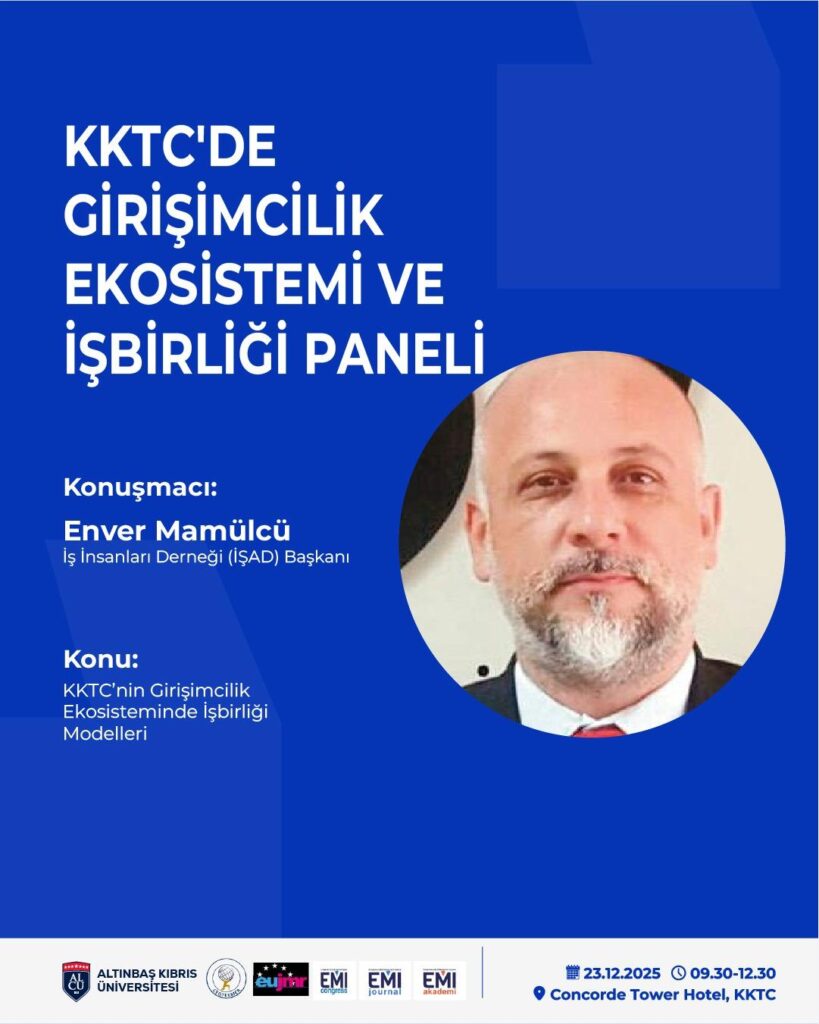
Enver Mamülcü
President, İŞAD
President, İŞAD
- Topic: Collaboration Models in TRNC’s Entrepreneurship Ecosystem
The institutionalization of family businesses was addressed under three main headings: professionalization, generational transition planning, and adoption of corporate governance principles.
Key points:
- Institutionalization and family constitutions are strategically necessary.
- Sustainability is a significant structural risk for family businesses.
- Professionalization requires management processes to be system-based rather than dependent on individuals.
- Generational transitions must be planned, transparent, and systematic.
- Corporate governance principles (transparency, accountability, fairness, responsibility) should be adopted.
- Family constitutions clarify roles and responsibilities, reducing internal conflicts and ensuring corporate stability.
- Institutionalization increases competitiveness, investor confidence, and long-term growth.
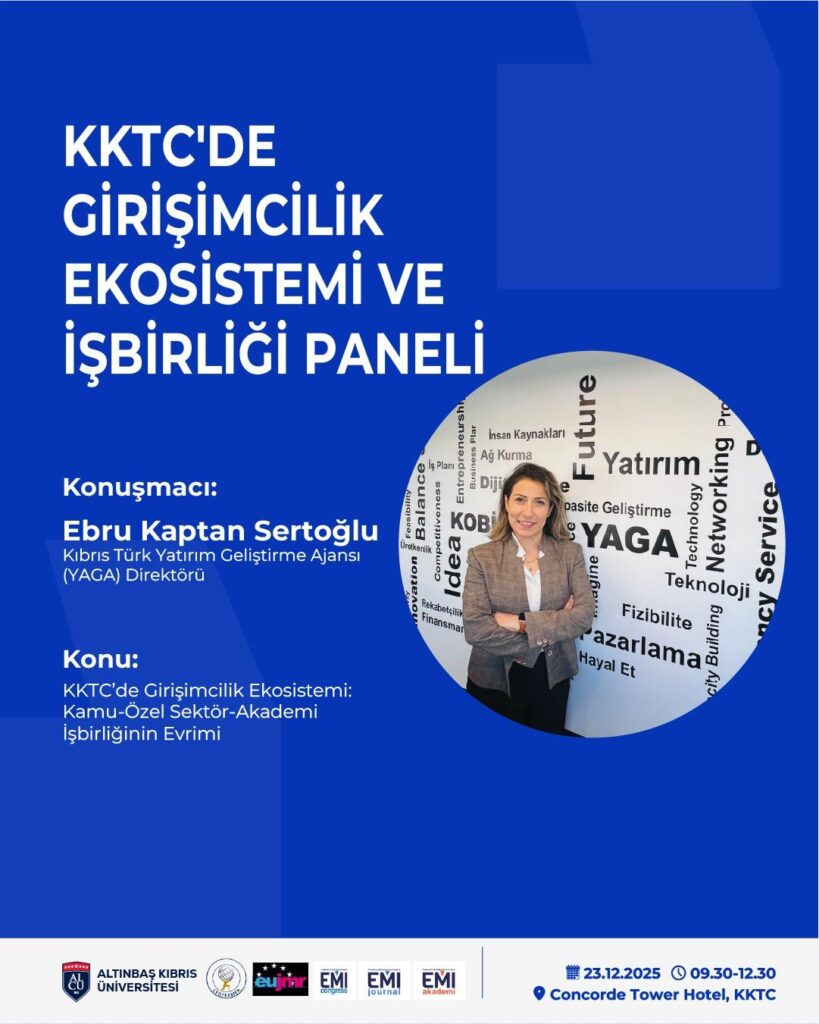
Ebru Kaptan Sertoğlu
Director, Cyprus Turkish Investment Development Agency (YAGA)
Director, Cyprus Turkish Investment Development Agency (YAGA)
- Topic: Evolution of Public-Private-Academia Collaboration
Sertoğlu focused on investment attraction strategies.
Highlights:
- The investment environment needs simplification.
- A transparent system that builds trust for international investors should be established.
- Sectoral investment priorities should be defined (technology, tourism, agricultural technologies).
Public perspective:
- Entrepreneurship support mechanisms face coordination issues.
- Political instability is the biggest risk in the investment environment.
- Short-term governments hinder long-term policies.
- Digitalization and e-government applications are insufficient.
- Bureaucratic procedures create obstacles for investors.
Additional points:
- Since 2016, 202 businesses have been established.
- Survival rate of 76% exceeds international averages.
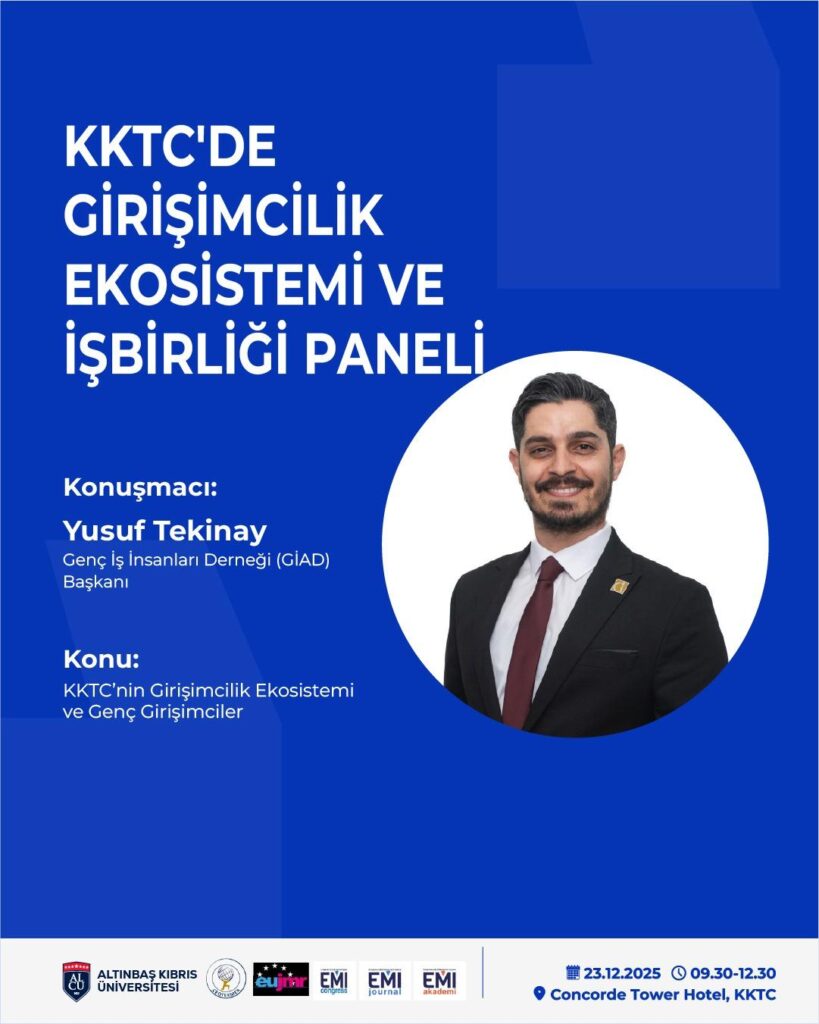
Yusuf Tekinay
President, Young Businessmen Association (GİAD)
President, Young Businessmen Association (GİAD)
- Topic: TRNC Entrepreneurship Ecosystem and Young Entrepreneurs
Tekinay shared challenges faced by young entrepreneurs:
- Difficulties accessing finance
- Inadequate mentorship and guidance mechanisms
- Long and complex bureaucratic procedures
- Underdeveloped venture capital and angel investment mechanisms
- Brain drain due to lack of opportunities
- Fragmented and uncoordinated entrepreneurship support systems
Proposed solutions:
- Establish a young entrepreneur fund
- Create start-up acceleration programs
- Provide tax incentives
He emphasized strengthening angel investor laws to support youth entrepreneurship.
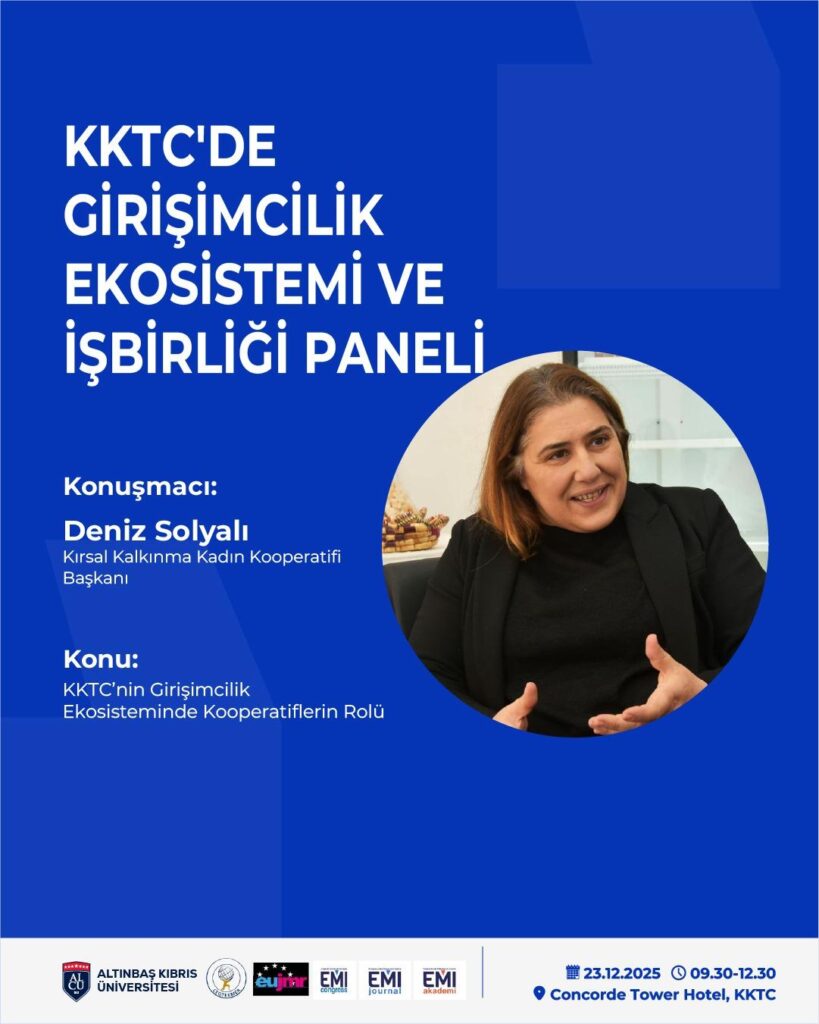
Deniz Solyalı
President, Rural Development Women’s Cooperative
President, Rural Development Women’s Cooperative
- Topic: The Role of Cooperatives in TRNC’s Entrepreneurship Ecosystem
Solyalı’s presentation reflected the local development perspective and highlighted women’s entrepreneurship. The cooperative model has proven to be an effective tool for development.
Key points:
- The women’s cooperative established in 2021 is an exemplary model for rural development.
- Solidarity culture and economies of scale reduce costs for small producers and facilitate market access, enabling sustainable production.
- A fruit and vegetable drying facility was established within the cooperative to increase value-added production.
- Branding and developing a corporate identity for local products are key goals.
- Technical support, training, and trust-building are critical in the cooperative model.
- Cooperatives provide safer and more sustainable entrepreneurship opportunities for micro-enterprises.
- Local production branding and enhanced marketing capacity are essential for rural development.
- Special financing tools, incentive programs, and low-interest loans should be offered to support women entrepreneurs.
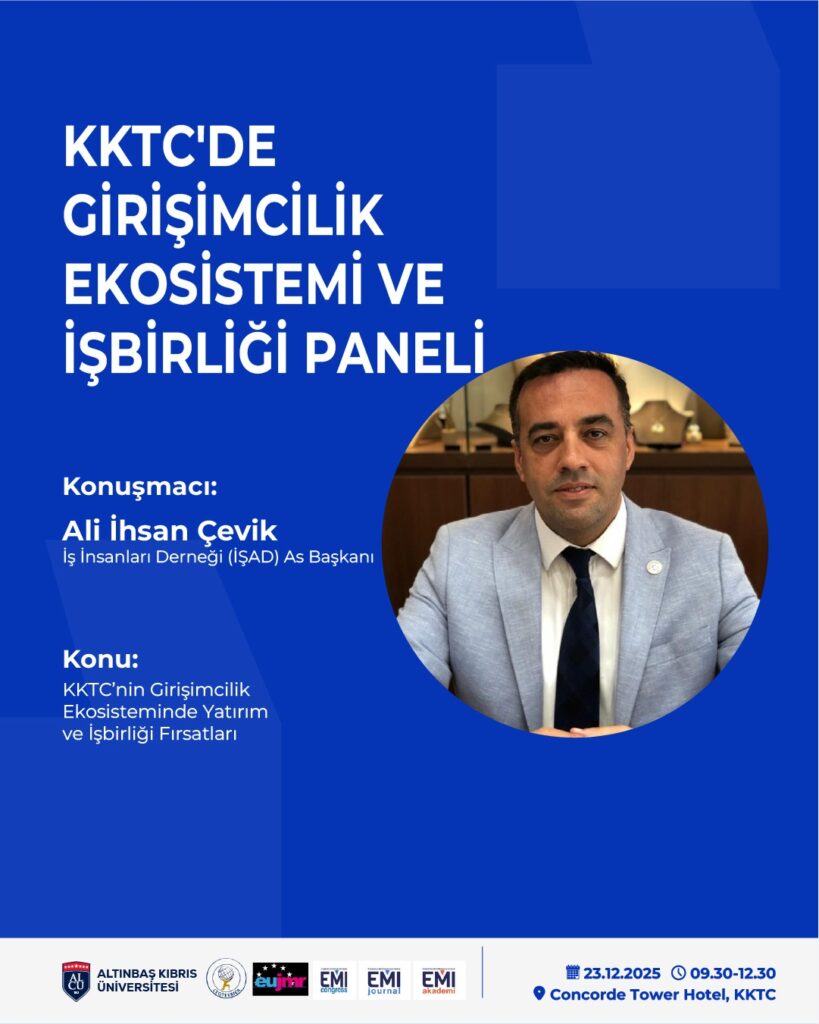
Ali İhsan Çevik
Vice President, İŞAD
Vice President, İŞAD
- Topic: Investment and Collaboration Opportunities
Energy investments, particularly solar energy projects and financing gaps, were discussed.
Factors negatively affecting the investment environment:
- Political instability
- Lack of digitalization
- Bureaucratic delays
Recommendations:
- Digitize bureaucratic processes
- Centralize investment guidance
- Increase legal certainty for foreign investors
- Promote renewable energy investments and prioritize them strategically
- Provide special incentives, grants, and tax advantages for solar energy projects
- Develop long-term, low-interest loans and special investment funds to address financing gaps
- Ensure a stable and predictable policy environment to reduce political uncertainty affecting investment decisions